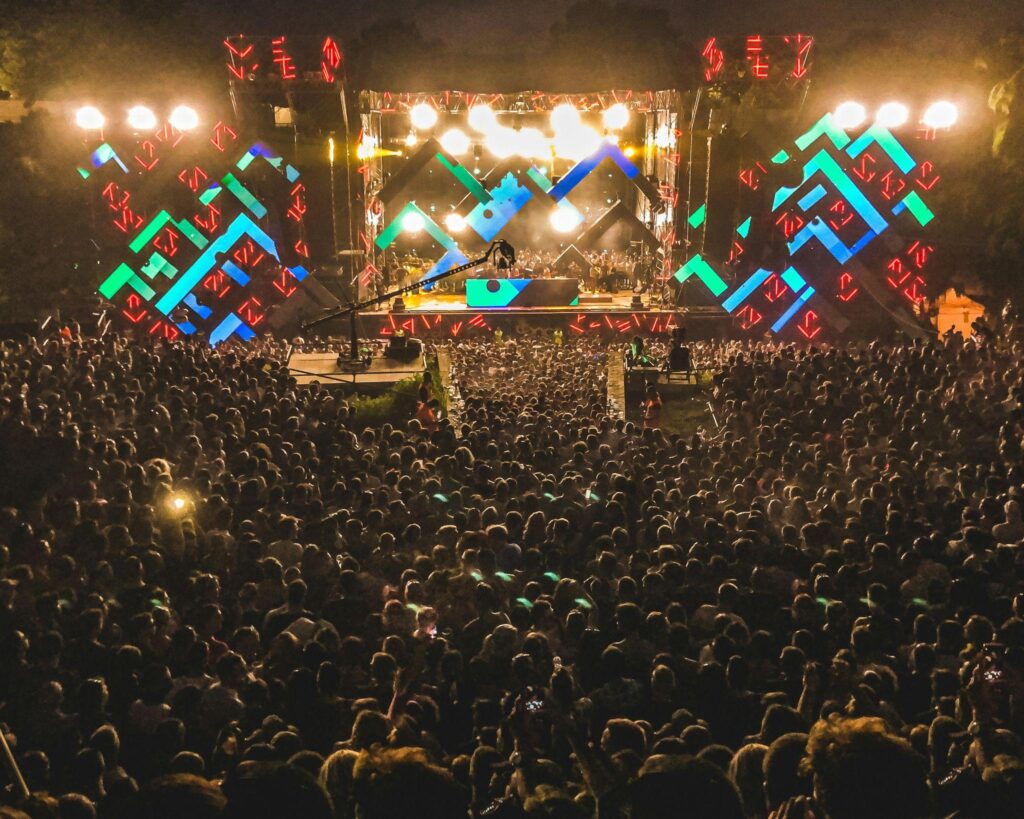
The last chord rings out, the crowd cheers, and then the stage goes quiet. The guitarist retunes, the bassist swaps instruments, the singer reaches for a bottle of water, and for the next 20 or 30 seconds nothing happens. Anyone who goes to gigs knows what follows. Conversations start up near the bar, phones come out, and the energy the band spent four minutes building begins to drain away. Sound effects can fill that silence and hold the room until the next song starts. The tips below cover picking the right sounds, triggering them at the right moment and setting levels that suit the venue.
Silence between songs costs a set its energy
Bands tend to think of a set as a list of songs, but the audience experiences it as one continuous show. Fans judge a real performance by how it felt from start to finish, and a set that keeps stalling feels weaker than its songs deserve. The problem is sharpest in small venues, where people stand close to the bar and any quiet moment invites chatter. That quiet stretch is exactly the space a well-planned transition sound can fill.
Pick sounds that fit each type of gap
Start with the material you play under the reset. Sound effects built for film and video suit the job because they set a mood without competing as music. The main tool for long changes is ambience, a quiet background sound such as a low hum or a soft, airy texture. It covers the clunk of a cable being swapped and the plink of a guitar being tuned, which most crowds would otherwise hear in full.
Quick changes need a different approach. When the next song follows in the same tuning, a reversed cymbal or a similar swell rising into the downbeat bridges the gap in a few seconds with no background at all. Longer breaks, such as a switch to an acoustic guitar or a keyboard, get the ambience first, then a riser, a sound that climbs steadily in pitch and volume, once the band is nearly ready. Sorting the set’s gaps into quick and long before the show makes these choices easy.
Trigger the sounds from the stage
Many bands already play live with a laptop that runs a click track, the steady beat the band hears through in-ear monitors to stay in time. Load the transition sounds into the same session so everything stays locked together. A foot switch or a pad on stage lets the band start each sound themselves, and when the riser sits on the same timeline as the click, it resolves exactly on the drummer’s first beat of the next song.
Build a safety net into the longer sounds as well. Give each background layer a section that can repeat on a loop, so if a string breaks or an amp cuts out, the sound keeps running while the problem gets fixed. The band triggers the riser only when everyone is ready, and the audience hears a planned moment instead of an awkward wait.
Use the song introduction as the cue
Talking to the crowd between songs is one of the best ways a band builds a connection, so the background should stop when the singer steps up to speak. The words that end the banter then make a natural cue for what comes next. When the singer announces the title of the next song, the riser starts underneath, and the band comes in as it peaks. Agree in advance which phrase starts the riser, so the person on the trigger never has to guess.
Plan for the room changing once it fills
Small rooms vary a lot, and a soft hum might rattle glasses behind the bar in one venue and disappear entirely in another. Set each transition at show volume during soundcheck while standing at the back of the room, then expect that level to change. A full room absorbs sound, so a hum that was perfect in an empty venue can vanish once the crowd arrives. Ask the engineer to keep the transitions on a fader within easy reach and to raise them slightly after doors open.
Rehearse the gaps along with the songs
Most bands rehearse their songs until they are tight and leave the gaps to chance. Running the full set with the transitions in place shows how long each change really takes and which background sounds run out before the guitarist finishes retuning. Time the slowest change, and choose a background sound long enough to cover it before the loop has to take over. Ocular Sounds’ ambience and drone sound effects are long enough to hold a room through an instrument swap. Get the gaps as tight as the songs and the phones go back into pockets before the first chord of the next song even lands. Get the gaps as tight as the songs and the phones go back into pockets before the first chord of the next song even lands.